════════════════════════════════════════════════════════════ -->
Employee Benefits

What Is a Flexible Benefits System? (And Why Credits Beat Vouchers)

April 15, 2026·5 min read·Flexible Benefits

Vouchers, reimbursements, and credits all claim to be flexible benefits. Only one of them actually removes the friction. Here is the honest comparison.

The term “flexible benefits” gets applied to several very different things: voucher schemes, reimbursement platforms, salary sacrifice arrangements, and credit-based marketplaces. They are not the same product.

Some of them deliver real flexibility. Others deliver the appearance of flexibility while adding friction that ensures most employees never actually use what they are entitled to.

This post explains what a flexible benefits system actually is, what the main delivery models look like in practice, and why the mechanism of delivery matters more than people expect.
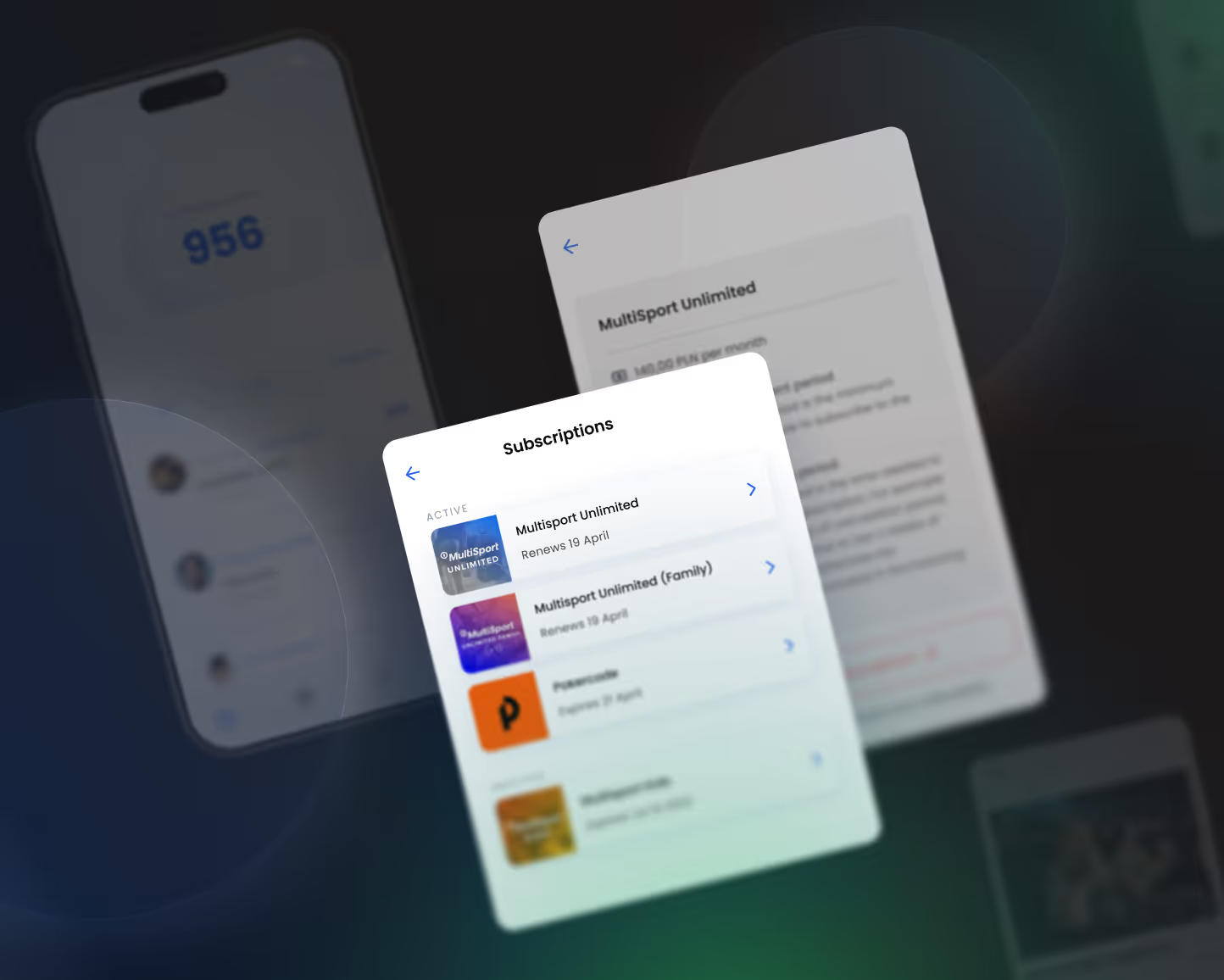
Masterhub Wallet — marketplace subscriptions showing flexible benefit options

What “flexible benefits” actually means

A flexible benefits system is any benefits model that gives employees a choice in how their benefit budget is used — rather than assigning everyone the same fixed package. The company provides the budget or the credit. The employee decides how to use it. The range of choices is defined by the company, but within that range, the employee has genuine autonomy.

This is the core definition. What varies enormously is how the choice is implemented and how easy it is to actually exercise.

The three main types of flexible benefits — and how they compare

Vouchers

The company provides physical or digital vouchers for specific benefit categories. The employee redeems the voucher at the relevant vendor.

Where this breaks down: vouchers are category-specific. An employee who does not want the gym voucher cannot swap it for something else. Expired codes and unredeemed vouchers are common when the category does not match what the employee actually wants.
Reimbursements

The employee purchases a benefit themselves and submits a receipt for reimbursement within the agreed benefit categories.

Where this breaks down: the employee has to spend personal money first and wait to get it back. Most employees find this process disproportionately effortful for smaller benefit amounts. The result is consistently lower utilization than companies expect.
Credits ✓

The company buys a bundle of credits and allocates them to employees. Employees see a visible credit balance and spend credits directly in a marketplace. No voucher codes, no receipts, no personal money involved.

Why this works: credits combine true category flexibility with zero upfront cost to the employee and zero friction in redemption. The visible balance drives engagement. The one-click spend completes it.

A visible credit balance feels like money you already have. A voucher code feels like a task to complete. That psychological difference explains most of the utilization gap between models.

See what a credit-based flexible benefits system looks like.No subscription — buy credits and allocate them.
Order credits →

Why the delivery mechanism matters more than the budget amount

Companies often assume that increasing the benefit budget will increase utilization. Sometimes it does. More often, the limiting factor is not the amount — it is the experience of accessing it.

An employee with ₵200 in a visible, frictionless credit balance will use more of it than an employee with £300 in a reimbursement allowance they have to claim. The amount is higher in the second case. The engagement is lower.

This is the core argument for credit-based flexible benefits over vouchers and reimbursements. The mechanism removes the friction that causes benefit money to go unspent — not by offering more, but by making what exists genuinely easy to use.

What a credit-based flexible benefits system looks like day-to-day

The company purchases a credit bundle. Allocation rules distribute credits to employee accounts — monthly, on a schedule, or as one-off sends for specific occasions.

The employee opens their Wallet. They see their current balance. They browse the marketplace — healthcare, gym, wellbeing, learning, home office, entertainment, and more. They select a category, spend credits, and the transaction completes.

No voucher code. No receipt. No reimbursement form. No second login. For flexible perks where the goal is genuine employee choice and high utilization, this is the model that produces the best outcome.

The short version

A flexible benefits system is any model that gives employees a choice in how their benefit budget is used. Vouchers, reimbursements, and credits are all “flexible” in theory.

In practice, credits consistently outperform the other models on utilization — because the balance is visible, the spending is frictionless, and employees choose categories that actually match their life.

Frequently asked questions

What is a flexible benefits system?

A flexible benefits system gives employees a benefit budget and lets them choose how to spend it from a set of approved categories. The main delivery models are vouchers (category-specific), reimbursements (employee claims back personal spend), and credits (a visible balance employees spend directly in a marketplace). Credits typically produce the highest utilization because they are frictionless and the balance is always visible.

Are flexible benefits better for employees?

For most employees, yes. A flexible model means the benefit budget can be directed toward what actually matters to that individual — their fitness preferences, family situation, or remote vs. office work pattern. Fixed packages force everyone to use the same set, which inevitably has low relevance for a portion of the team.

What is the difference between a fringe benefit and a flexible benefit?

Fringe benefits are any non-salary benefits provided by an employer — gym access, healthcare, meals, learning budgets. Flexible benefits is a model for how those benefits are delivered — giving employees a budget and choice, rather than a fixed set. A credit-based flexible benefits platform is a way of delivering fringe benefits with maximum employee choice and minimum friction.

Do flexible benefits cost more than fixed packages?

Not necessarily. A credit-based flexible model can cost the same as a fixed package — the difference is that employees spend the budget on what they actually want. Wasted benefit spend (paying for subscriptions employees do not use) is typically lower in a flexible model.

See what a credit-based flexible benefits system looks like.

One credit system. Every benefit use case covered.

No subscription — buy credits and allocate them.

Employee Benefits

What Is a Flexible Benefits System? (And Why Credits Beat Vouchers)

April 15, 2026·5 min read·Flexible Benefits

Vouchers, reimbursements, and credits all claim to be flexible benefits. Only one of them actually removes the friction. Here is the honest comparison.

The term “flexible benefits” gets applied to several very different things: voucher schemes, reimbursement platforms, salary sacrifice arrangements, and credit-based marketplaces. They are not the same product.

Some of them deliver real flexibility. Others deliver the appearance of flexibility while adding friction that ensures most employees never actually use what they are entitled to.

This post explains what a flexible benefits system actually is, what the main delivery models look like in practice, and why the mechanism of delivery matters more than people expect.

Masterhub Wallet — Multisport and subscription benefits in the marketplace

What “flexible benefits” actually means

A flexible benefits system is any benefits model that gives employees a choice in how their benefit budget is used — rather than assigning everyone the same fixed package.

The company provides the budget or the credit. The employee decides how to use it. The range of choices is defined by the company, but within that range, the employee has genuine autonomy.

This is the core definition. What varies enormously is how the choice is implemented and how easy it is to actually exercise.

The three main types of flexible benefits — and how they compare

Vouchers

The company provides physical or digital vouchers for specific benefit categories. The employee redeems the voucher at the relevant vendor.

Where this breaks down: Vouchers are category-specific. An employee who does not want the gym voucher cannot swap it for something else. Expired vouchers and unredeemed codes are common when the category does not match what the employee actually wants.

Reimbursements

The employee purchases a benefit themselves and submits a receipt for reimbursement. The company reimburses within agreed categories.

Where this breaks down: The employee has to spend personal money first and wait to get it back. Most employees find this process disproportionately effortful for smaller benefit amounts. The result is consistently lower utilization than companies expect.

Credits ✓

The company buys a bundle of credits and allocates them to employees. Employees see a visible credit balance in a platform and spend credits directly in a marketplace — no voucher codes, no receipts, no personal money involved.

Why this works: Credits combine true category flexibility with zero upfront cost and zero friction in the redemption process. The visible balance drives engagement. The one-click spend completes it.

The difference between vouchers and credits is not just technical — it is psychological. A visible credit balance feels like money you already have. A voucher code feels like a task to complete.

See a credit-based flexible benefits system in practice.No subscription — buy credits and allocate them.
Order credits →

Why the delivery mechanism matters more than the budget amount

Companies often assume that increasing the benefit budget will increase utilization. Sometimes it does. More often, the limiting factor is not the amount — it is the experience of accessing it.

An employee with ₵200 in a visible, frictionless credit balance will use more of it than an employee with £300 in a reimbursement allowance they have to claim. The amount is higher in the second case. The engagement is lower.

This is the core argument for credit-based flexible benefits over vouchers and reimbursements. The mechanism removes the friction that causes benefit money to go unspent — not by offering more, but by making what exists genuinely easy to use.

What a credit-based flexible benefits system looks like day-to-day

The company purchases a credit bundle. Allocation rules distribute credits to employee accounts — monthly, on a schedule, or as one-off sends for specific occasions.

The employee opens their Wallet. They see their current balance. They browse the marketplace — healthcare, gym, wellbeing, learning, home office, entertainment, and more. They select a category, spend credits, and the transaction completes.

No voucher code. No receipt. No reimbursement form. No second login. For flexible benefits where the goal is genuine employee choice and high utilization, this is the model that produces the best outcome.

The short version

A flexible benefits system is any model that gives employees a choice in how their benefit budget is used. Vouchers, reimbursements, and credits are all “flexible” in theory.

In practice, credits consistently outperform the other models on utilization — because the balance is visible, the spending is frictionless, and employees choose categories that actually match their life.

Frequently asked questions

What is a flexible benefits system?

A flexible benefits system gives employees a benefit budget and lets them choose how to spend it from a set of approved categories, rather than assigning the same fixed package to everyone. The main delivery models are vouchers (category-specific), reimbursements (employee claims back personal spend), and credits (a visible balance employees spend directly in a marketplace). Credits typically produce the highest utilization because they are frictionless and the balance is always visible.

Are flexible benefits better for employees?

For most employees, yes. A flexible benefits model means the benefit budget can be directed toward what actually matters to that individual — their fitness preferences, family situation, remote vs. office work pattern, or current priority. Fixed packages force everyone to use the same set, which inevitably has low relevance for a portion of the team.

What is the difference between a fringe benefit and a flexible benefit?

Fringe benefits are any non-salary benefits provided by an employer — gym access, healthcare, meals, learning budgets. Flexible benefits is a model for how those benefits are delivered — giving employees a budget and choice, rather than a fixed set. A credit-based flexible benefits platform is a way of delivering fringe benefits with maximum employee choice and minimum friction.

Do flexible benefits cost more than fixed packages?

Not necessarily. A credit-based flexible model can cost the same as a fixed package — the difference is that employees spend the budget on what they actually want. Wasted benefit spend (paying for subscriptions employees do not use) is typically lower in a flexible model.

See what a credit-based flexible benefits system looks like.

One credit system. Every benefit use case covered.

No subscription — buy credits and allocate them.