What Employee Benefits Do Employees at SMBs Actually Use? (And What They Ignore)
Gym cards, meal vouchers, fixed subscriptions — low utilization, every time. Credits employees choose for themselves: 70–85% engagement. The real utilization data.
The question most small businesses never ask — because the answer is uncomfortable — is: what percentage of benefit spend is producing any value for the employees it is meant to serve?
The honest answer, for most companies running a fixed benefit package, is around 40 to 55%. Which means for every £100 spent on employee benefits, £45 to £60 goes toward subscriptions employees are enrolled in but not actually using.
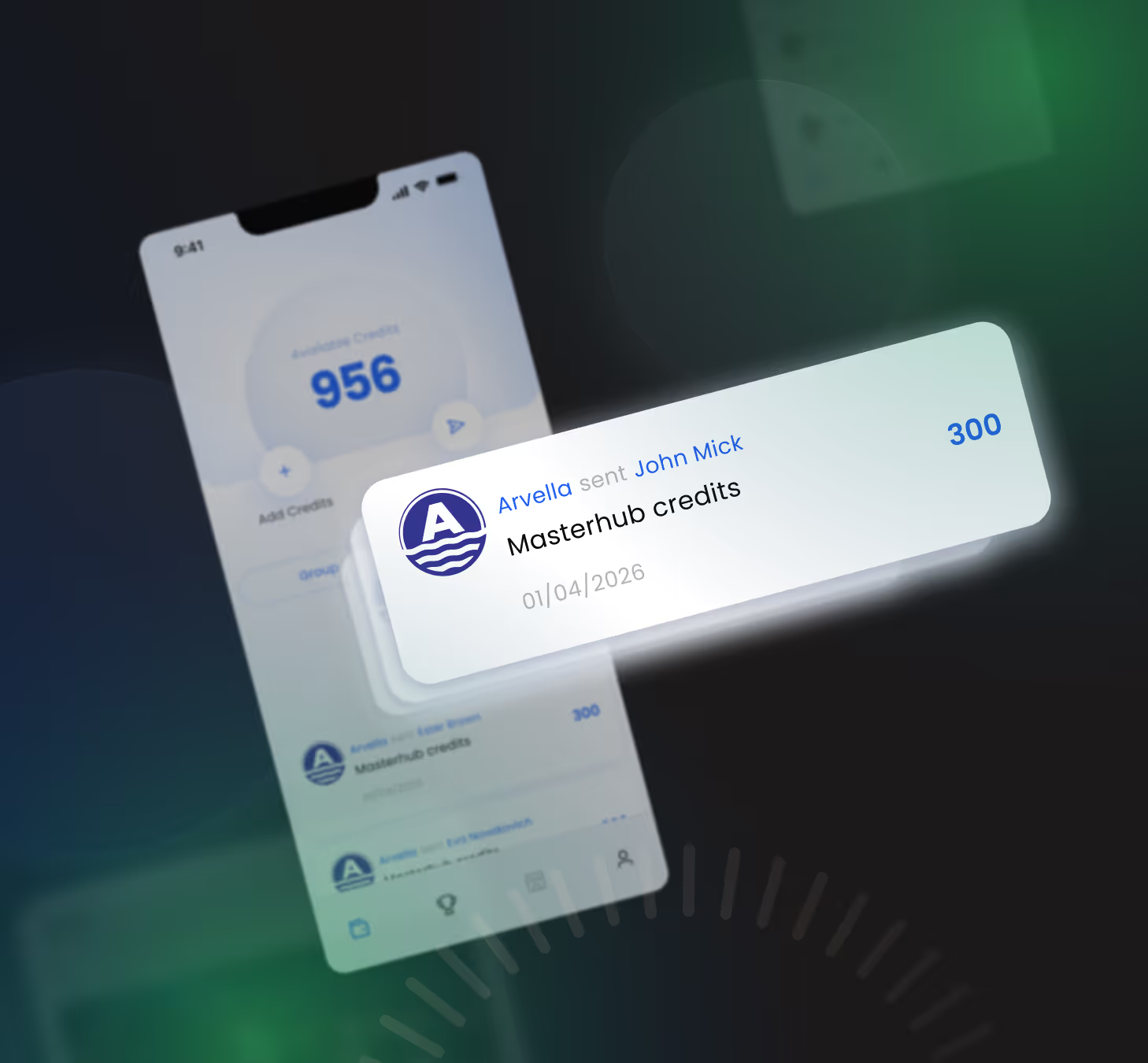
The benefits SMB employees consistently do not use
Gym memberships and fitness partnerships
Corporate gym deals are the most reliably underutilised benefit at any company size. The pattern is consistent: high sign-up rates in January, declining by March, low active usage by summer. The specific reasons vary — the gym is not near enough, the employee already has a different membership, the employee prefers running. The company continues paying the monthly rate per enrolled employee regardless. Usage data rarely reaches the HR team.
Meal vouchers for a hybrid or remote team
Meal vouchers tied to specific restaurant partners or city locations reach one subset of the team — employees in the office regularly, near the relevant vendors. For remote employees, hybrid workers, or people who travel frequently, the benefit is essentially unusable. At most SMBs with any degree of remote working, 30 to 50% of the team does not benefit from meal vouchers. All of them are enrolled in the cost.
Wellbeing apps with a one-month engagement spike
The wellbeing app launch follows a predictable arc. High download rates in the first week when announced. Active usage in the first month. A gradual decline as the novelty wears off. Six months after launch, a typical company wellbeing app has active engagement from 10 to 25% of enrolled employees. The subscription is still running for 100% of them.
Learning platforms nobody logs back into
Enterprise learning platforms receive high engagement in the first month of access. Within three months, most employees have completed the one or two courses immediately relevant and stopped returning. The issue is generic content, not content relevant to what the employee needs this month. A learning credit directed toward a specific course the employee chose produces far higher engagement.
The benefits SMB employees consistently do use
The consistent pattern from credit-based platforms is clear: employees spend on benefits that match their current situation, chosen by themselves, with immediate access and no friction. Top categories by actual credit spend:
Why choice is the key variable
The consistent pattern across benefit utilization data is that employee choice drives engagement, and fixed assignment suppresses it. An employee who chooses a wellbeing credit uses it. An employee enrolled in a wellbeing app subscription that was chosen for everyone often does not. The benefit category may be identical. The delivery model determines whether it reaches the employee as something they value or something they were given.
Credit-based platforms: 70–85% utilization. Fixed vendor subscription packages: 35–55%. Same team. Same budget. Different delivery model.
The short version
SMB employees ignore gym memberships they never wanted, meal vouchers that do not work for remote workers, and wellbeing apps that were relevant for a month. They use benefits that match their actual life, chosen by them, available immediately.
Credits replace the guess with a choice. When employees direct their own benefit budget, they spend it. When the company directs it for them, a significant fraction disappears.
Frequently asked questions
The highest-utilization benefits at SMBs are those employees choose for themselves: flexible wellbeing credits, open learning budgets for any course or platform, home office equipment for remote workers, and lifestyle credits. Fixed packages — gym memberships, company-wide wellbeing app subscriptions, office-tied meal vouchers — consistently produce lower utilization.
The two primary reasons are category mismatch (the benefit does not fit the individual’s actual needs) and low visibility (the employee does not know what they have, or the process of accessing it is more friction than it seems worth). Both are solved by a credit platform: employees choose relevant categories, and the balance is always visible.
Fixed vendor subscription packages at SMBs typically achieve 35–55% average utilization across all enrolled benefits. Credit-based platforms where employees choose their own categories and see a visible balance consistently achieve 70–85%. The difference is not the budget — it is the delivery model.
The most direct lever is making the benefit visible as a balance employees see without searching. The second is giving employees category choice. The third is removing friction at the point of use — one platform, no separate logins. All three together consistently move utilization from the 40% range to the 75–85% range.
See what your benefit spend looks like when employees choose.
Real utilization data. Credits that actually get used.
No subscription — buy credits and allocate them.