Social Recognition at Work: How to Make It Visible Without Making It Awkward
Public recognition builds culture differently than private. How to make visible acknowledgment feel normal — not forced — and what credit-powered social moments look like.
Most people have been in a team where someone was publicly recognised in a way that felt slightly off. The announcement was well-intentioned. The recipient looked uncomfortable. The applause was muted.
And most people have also been in teams where someone was called out for great work and the whole room felt genuinely glad — the recognition was specific, earned, and delivered in a way that made the culture visible rather than manufactured.
The difference between those two experiences is not about whether recognition is public or private. It is about whether the social element is authentic or performative.
What social recognition is
Social recognition is any recognition that is visible to people beyond just the sender and the recipient. It can be a public feed where Kudos sent between employees is visible to the wider team, a Slack channel where recognition is shared, a company-wide announcement of a milestone, or a mention in a team meeting.
Social recognition amplifies the effect of the acknowledgment. When a colleague’s contribution is visible to the team — not just to that colleague — it makes the recognised employee feel seen publicly, and it signals to the rest of the team what contributions the company values. That signal is what makes social recognition culturally powerful. And it is also what makes it possible to get wrong.
Authentic vs. performative — the distinction that matters
Authentic social recognition is recognition that would have been sent regardless of whether it was public — it just happens to be visible. The way to build this: design the recognition mechanism so the default is to recognise in the most natural way possible, and make social visibility an optional or default layer, not a requirement.
How a public recognition feed changes team culture
When a public feed of peer recognition activity is visible to the team, three things tend to happen over time:
Contributions that would otherwise be invisible to most of the team become part of the team’s shared awareness. The team develops a more complete picture of who is contributing what, beyond what is visible in formal output.
The types of contributions that get recognised publicly define what the team considers worth recognising. When specific, human, accurate recognition appears in the feed, that becomes the standard. Generic recognition makes it the norm instead.
Employees who see others sending recognition are more likely to send it themselves. The public feed normalises the behaviour and answers the unspoken question: is this something people actually do here?
What credit-powered social recognition looks like
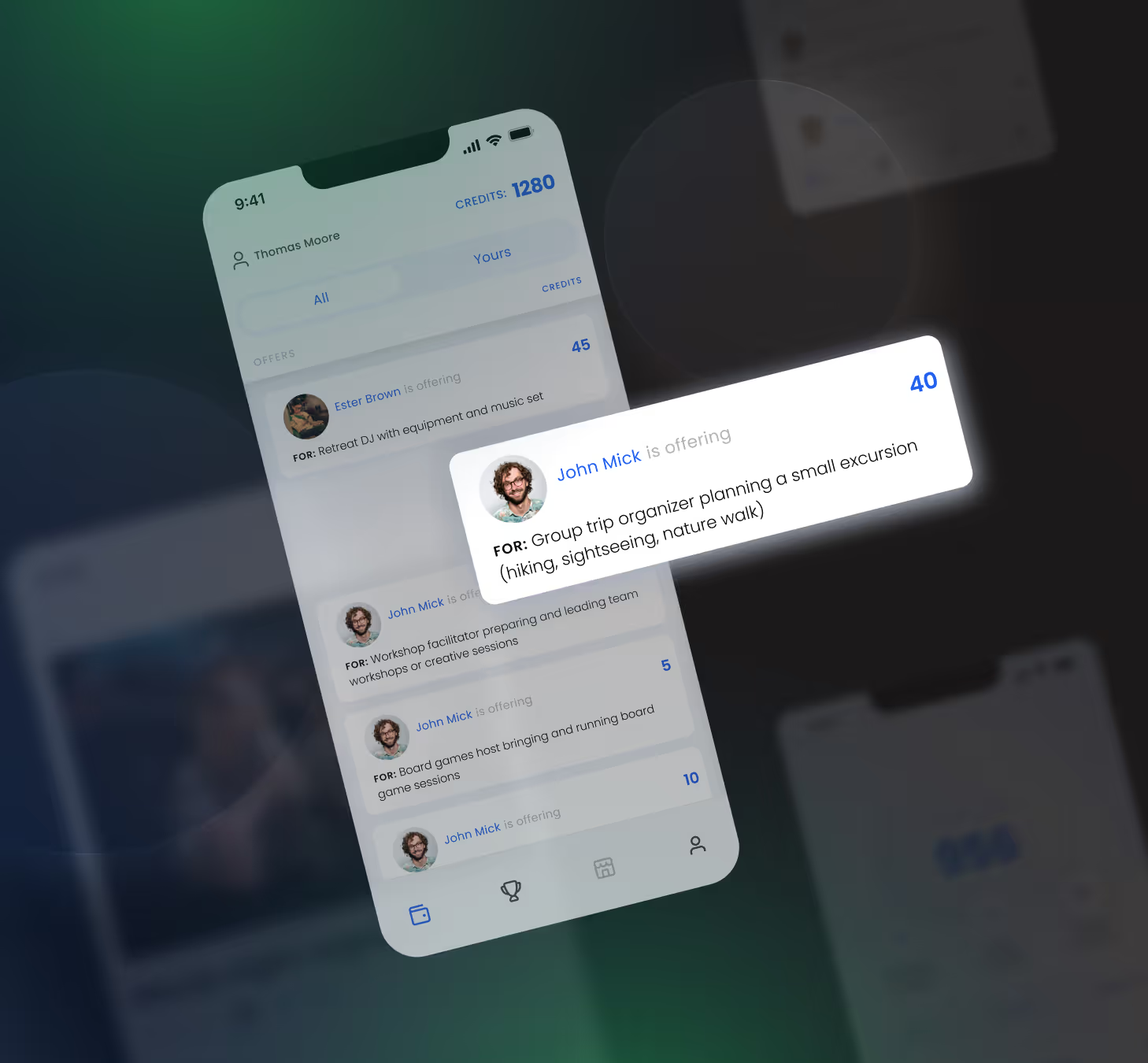
In a credit-based recognition system, the social layer is built on real transactions rather than virtual gestures. When a colleague sends ₵10 to a teammate with a personal message, that is not a notification — it is a real credit transfer with a real value the recipient can spend.
When this appears in a public feed — “Marcus sent ₵10 to Sara for turning around the client deck on Thursday” — it communicates something concrete: someone valued this enough to give something real. That is different from a thumbs-up reaction or a badge. The social element adds visibility. The credit element adds weight.
Practical design guidance
If your recognition interface prompts employees to write a message, give them an example of what specific looks like: “describe the actual thing they did — not just that it was good.” This sets the norm early.
Some employees prefer private recognition. A programme that forces all recognition to be public will produce fewer recognitions overall because some employees will avoid sending rather than making the acknowledgment visible.
A feed with 50 vague recognitions per week is less useful culturally than one with 10 specific, genuine ones. The goal is quality of signal, not volume of posts.
The short version
Social recognition is powerful when it is authentic and specific. It fails when it is performative or generic. The social layer adds cultural visibility — the team sees what is valued. That outcome comes from a recognition culture where people send acknowledgments because they mean them, and the visibility is a natural byproduct.
Frequently asked questions
Social recognition is employee recognition that is visible to people beyond just the sender and recipient. It includes public feeds where peer recognition is shared, team announcements of contributions, and shared acknowledgments in company communication channels. It amplifies the effect of the acknowledgment by making the contribution visible to the wider team.
A social recognition platform is software that facilitates peer-to-peer recognition with a visible social element — typically a feed where recognition activity is shared with the team or company. The best platforms combine a real reward mechanism (credits, not just badges) with specific message prompts and a public feed that builds cultural norms around what contributions are worth acknowledging.
Social recognition makes contributions visible that would otherwise be invisible. It signals what behaviours the company values. It normalises the practice of acknowledging colleagues — when employees see others sending recognition, they are more likely to do it themselves. Over time, a consistent and specific social recognition feed builds a shared sense of what the team stands for.
The main risk is performativity — recognition that exists to be seen as recognition rather than as a genuine acknowledgment. This produces vague, generic messages that carry no cultural signal and can feel hollow to both senders and recipients. The solution is to design recognition mechanics that encourage specificity and make the public element optional or default rather than mandatory.
Recognition that is real, specific, and visible.
Credits, messages, and a team culture that reflects what actually happens.
No subscription — buy credits and allocate them.