How We Used Internal Creator Channels to Surface Hidden Expertise at MasterHub
First-person: how MasterHub employees started posting, others followed, and knowledge that disappeared into meetings now lives somewhere the whole company can access.
We build Masterhub Wallet. We also use it — every week, for the same problems our customers are trying to solve.
One of those problems is knowledge sharing. Not the version where HR asks everyone to contribute to a wiki and the wiki goes stale in three months. The version where genuinely useful expertise lives in people’s heads and disappears when they are busy or when they leave. This is the story of how internal creator channels changed that for us, what we expected, and what actually happened.
The problem we were trying to solve
We had people at MasterHub who knew things that would have saved their colleagues time if those colleagues had access to it.
A person on the data team who had spent two months optimising a pipeline process and answered the same question about it repeatedly in Slack. A client-facing team member who had developed a mental model for handling difficult onboarding conversations that was invisible to everyone except the people she happened to speak to directly. A developer who had built a debugging approach for a specific type of production issue that the rest of the team would have benefited from knowing.
None of this was being captured. Every question asked in Slack was answered and then gone. We tried a wiki. We set up a documentation structure. It lasted one quarter before the maintenance burden exceeded the contribution momentum and the pages started becoming outdated.
What we did instead
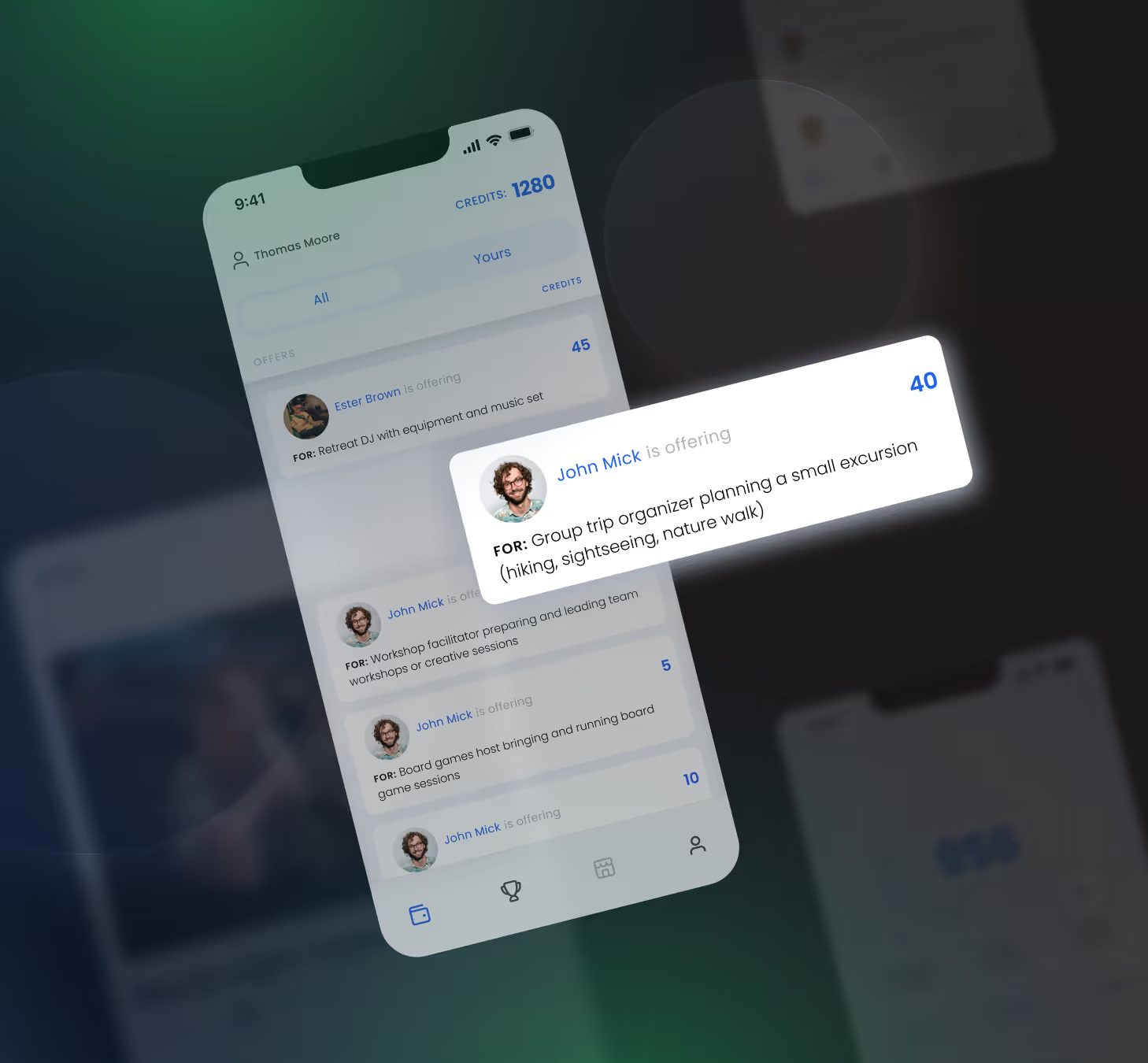
We launched internal creator channels inside our own Wallet instance. Any employee creates a channel and posts content — short videos, tips, walkthroughs. Colleagues follow the channel, request topics, and support the creator with credits from their Wallet balance.
We did not mandate participation. We did not run a kickoff meeting about the importance of knowledge sharing. We opened the feature, explained the mechanic in a short message, and left it to the team. The first channel appeared within a week. Then a second. Then a third. By the end of the first month, four people had created channels independently — not because they were asked to, but because the mechanism existed and made it worth doing.
What the channels covered — and who created them
A three-part series explaining the original problem, the approach taken, and the decisions that most people would not think to ask about. 12 followers within two weeks. Credits from colleagues who said the content had saved them from making the same mistakes.
A screen recording with narration, eight minutes. Three colleagues watched it before they hit the same class of problem. None of them needed to ask for help. The knowledge was already there.
Started posting after a colleague requested a topic: “How do you handle the first call when the client seems unsure about whether they made the right decision?” Her response to that request became her most-supported video.
What struck us was how specific and practical the content was. Nobody was posting generalised “best practices” or formal training material. They were posting answers to real questions that real colleagues were asking.
The credit mechanism — what it actually changed
The credits are small. A ₵10 send from a colleague. A ₵5 acknowledgment from someone who found a video useful. The amounts are not the point.
That is a fundamentally different signal from a Slack message that disappears. She knew the content had value. She knew who valued it. She posted again. And again. The credit mechanism did not create her willingness to share knowledge. It created the signal that made sharing feel worth the effort.
What stayed when people were busy
The creator channels kept running during high-pressure periods — not because people felt obligated, but because the content was already there. Colleagues who needed information could still watch videos posted three months ago. The channel did not require the creator to be available. The knowledge was accessible without a Slack message, without booking a call, without waiting for a response.
This is the property that wikis promise and creator channels actually deliver.
What we would do differently
One thing we underestimated was the value of topic requests as a discovery mechanism. In the first month, most creators posted what they thought colleagues needed. When we encouraged colleagues to actively request topics — and when creators started responding to those requests — the content became significantly more targeted.
The request function is not just useful for the creator. It is how the team communicates what knowledge is missing. We now treat the requested topics list as a map of the company’s knowledge gaps. If we were starting again, we would make “request a topic” the first action we encouraged, rather than the last.
The short version
Internal creator channels worked at MasterHub because they matched the format to the knowledge (video for tacit, contextual expertise), built an incentive into the mechanic (credits from colleagues who found it useful), and required no ongoing maintenance from HR or management.
The knowledge that used to disappear into Slack and meetings now lives somewhere the whole company can access. The people who created it were recognised for doing so. The people who needed it could find it without asking.
Frequently asked questions
MasterHub launched internal creator channels within their own Masterhub Wallet instance. Employees created channels voluntarily, posting short videos and practical tips about their areas of expertise. Colleagues followed channels, requested topics, and sent credits to creators whose content they found useful. Within the first month, four independent channels had formed organically, covering data engineering, debugging, and client communication.
The credits created a feedback loop that informal knowledge sharing lacked. A creator who posted a video received a tangible, visible signal — credits from specific colleagues, with messages explaining which content was valuable. This signal made continued contribution feel worthwhile in a way that a Slack “thanks” did not. The amounts were small; the specificity of the acknowledgment was what mattered.
The wiki required text-based documentation maintained by someone with time to write. Creator channels required a short video from someone with something to say. The format matched the knowledge. The incentive (credits from colleagues) provided a reason to contribute that obligation alone could not sustain.
Yes. The approach does not require a large team, a formal programme, or an HR team to manage. The mechanic — any employee creates a channel, posts content, colleagues support with credits — is available to any Masterhub Wallet account from day one. The content that emerges is specific to the company because it comes from the people inside it.
See what internal creator channels look like inside a real product.
And how to launch them for your team.
No subscription — buy credits and allocate them.