How to Build an Employee Recognition Program That People Actually Use
Most recognition programmes disappear after 3 months. The 4 failure modes — top-down only, too infrequent, no real value, no peer layer — and how to fix each one.
Most companies that launch an employee recognition programme have the same experience. Strong engagement in the first month. A gradual drop through month two. By month four, the programme exists on paper but not in practice.
The initiative gets written off as something “employees weren’t interested in.” But that diagnosis is usually wrong. Employees are interested in being recognised. What they are not interested in is using a programme that is built badly.
This post breaks down the four failure modes that kill recognition programmes before they take hold — and what to build instead.
Why most recognition programmes fail
Four failure modes, all predictable, all fixable:
Only managers or the company can recognise people. Employees are on the receiving end, never the source. This misses at least half the moments worth acknowledging — the ones that happen between colleagues below the line of manager visibility.
Annual awards. Quarterly recognition cycles. Monthly “employee of the month” that requires a nomination process nobody has time to complete. Recognition that happens four times a year is not a culture — it is an event. And when someone is recognised in a quarterly cycle for work they did in month one, the emotional connection is largely gone.
Digital badges, virtual medals, a mention in the company newsletter. These have their place — but when they are the only reward mechanism, the programme signals that recognition is nominal. A £10 credit a colleague chose to send from their own balance carries more weight than a “star employee” badge awarded by an algorithm.
Multiple steps. A separate platform. A nomination form. Manager approval. The more steps between the impulse to recognise and the act of recognising, the fewer recognitions happen. When an action requires effort and the motivation is moderate — “I should thank Sarah for that” — the friction kills it.
What a well-built recognition programme looks like
Fix all four failure modes and the programme sustains itself:
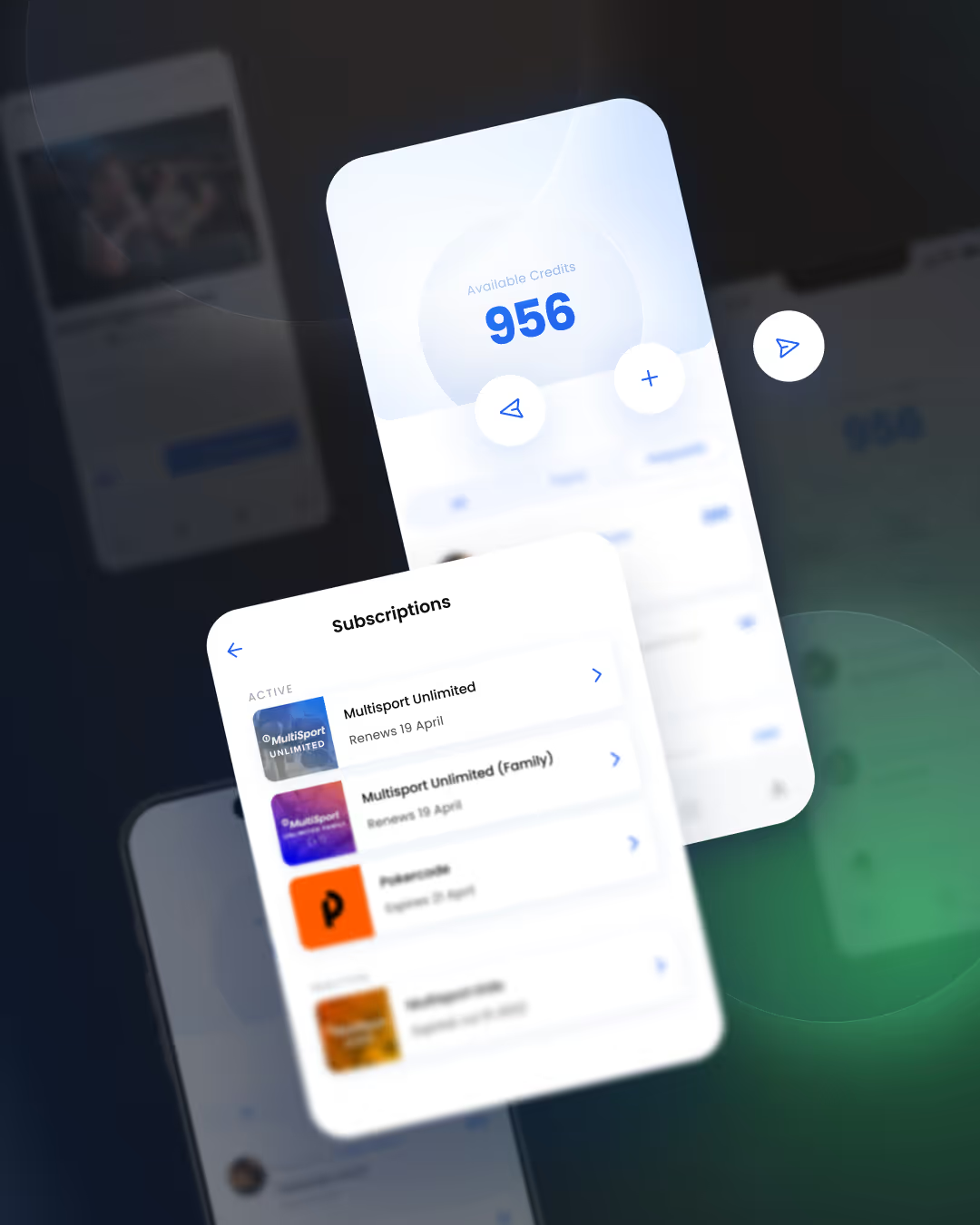
Give every employee the ability to send recognition to any other employee — directly, without approval. A credit-based system works well: employees have a balance they can spend in the marketplace and also direct a portion to a colleague with a personal message. The peer layer built into the same system as the benefit spend, not bolted on separately.
Monthly credit drops employees can send to colleagues. Automated milestone triggers for work anniversaries, new hire welcome credits, project completions. Spot awards that managers or peers can send immediately. Recognition becomes a background hum of team culture — something that happens regularly enough that employees expect it and notice its absence.
Credits are effective because they are real and immediately usable. An employee who receives ₵10 from a colleague can open the Wallet and spend it on a gym session or a coffee voucher that afternoon. The amount can be modest — what matters is that the value is genuine, not a notification.
Map the exact flow for sending recognition. Count the steps. If it takes more than four actions from impulse to the recipient seeing it, the process is too slow. Target: one platform, one search for the recipient, one amount, one message, one send.
What to measure once the programme is running
A recognition programme that produces no data is a programme you cannot improve. The metrics that matter:
- Recognition frequency — how many events per month, per team. Low frequency in a specific team is often a signal worth investigating.
- Peer-to-company ratio — what percentage is peer-to-peer vs. company or manager-led. High peer ratios correlate with stronger culture outcomes.
- Credits sent vs. credits available — if employees are not using their peer recognition allocation, something is wrong with the mechanism or the culture.
- Team-level variation — high and low outliers are usually the most informative.
The programme structure that works at different company sizes
Monthly credit drops. Peer recognition with a ₵5–₵20 range. No approval workflow. One platform for everything. Culture is built in real time — the programme should match that pace.
Add milestone automation: work anniversaries, new hire welcome credits, project completions. Monthly reporting on recognition frequency by team. Manager-led recognition on the same platform as peer recognition.
Department-level analytics become important. Who is sending, who is receiving, which teams have low recognition activity. Recognition becomes a leading indicator for engagement and retention — treat the data that way.
The short version
Recognition programmes fail for four reasons: top-down only, too infrequent, no real value, too much friction. Fix all four and the programme sustains itself.
What determines success is whether the peer layer exists, whether the frequency is high, whether the reward is real, and whether sending recognition takes less than two minutes.
Frequently asked questions
Include peer-to-peer recognition from the start (not just top-down), make recognition frequent rather than periodic, attach real reward value (not just badges), and remove friction from the sending process. Most recognition programmes fail because they address only one or two of these — the ones that last address all four.
Specificity, frequency, real value, and low friction. Recognition should name the specific action, happen close to when the action occurred, attach a tangible reward the recipient can use, and require no more than 90 seconds to send. Programmes that meet all four criteria consistently outperform those that rely on periodic formal awards.
The most common reason is relying on a single top-down recognition mechanism and ignoring peer recognition. The second most common reason is too-low frequency — quarterly or annual cycles that miss most of the moments worth acknowledging.
Recognition should be possible at any time, not restricted to scheduled cycles. Monthly drops with a peer-sendable credit allocation are a practical foundation. The goal is a culture where recognition happens continuously — peer credits sent when a colleague does something worth acknowledging, automated milestone credits on anniversaries and events, manager acknowledgments when relevant.
Recognition that is built in — not bolted on.
Peer credits, milestone automation, and real usage data. All in one platform.
No subscription — buy credits and allocate them.