What Does a Good Employee Benefits Package Look Like for a Small Business in 2026?
Healthcare, wellbeing, learning, recognition, flexibility. What a competitive small business benefits package actually includes in 2026 — and what to skip.
“Competitive benefits” used to mean healthcare and a pension. Now the landscape has shifted — and what employees expect, particularly at smaller companies, has changed with it.
This post is about what a genuinely useful, realistic, and well-delivered benefits package looks like for a company with 20 to 200 employees in 2026. What to include, what to skip, and what the standard has shifted to.
The five categories that belong in a 2026 SMB benefits package
1. Health and wellbeing — flexible, not fixed
Healthcare coverage remains a baseline expectation, but the way employees expect it delivered has changed. A single corporate health plan that fits everyone is increasingly rare at SMB scale. What works better: a flexible health and wellbeing credit employees direct toward the specific support they need — whether that is private GP access, therapy, physiotherapy, nutrition, or fitness. Same budget. Each person directs it toward real value.
2. Learning and development — on the employee’s terms
L&D has become one of the most expected benefits at SMBs. The expectation has shifted from “we will fund specific courses we approve” to “you have a learning budget, use it on what matters to your development.” A credit allocation directed toward courses, books, conferences, or coaching — without a request process — signals genuine investment. The absence of friction is as important as the budget amount.
3. Recognition — peer and company
In 2026, the companies that include peer recognition infrastructure in their benefit package — a mechanism for employees to acknowledge each other, built into the same platform as spending benefits — have measurably higher engagement scores. A monthly credit allocation that includes the ability to send a portion to a colleague, with a personal message, is enough to build the foundation. The mechanism creates the culture.
4. Home office and remote work support
For any company with remote or hybrid employees, home office support has become a standard expectation. A credit allocation toward home office supplies — monitor arms, keyboards, good lighting, a proper chair — is one of the highest-utility benefits for remote teams. Practical, personal, and genuinely appreciated.
5. Something that signals you see the person, not just the employee
Benefits that signal the company sees employees as full people include birthday credits, work anniversary recognition, onboarding welcome packages, and perks that acknowledge life outside of work. These are often inexpensive. Their value is in the signal: you work here and we are aware you have a life.
What to skip in a 2026 SMB benefits package
Free snacks and on-site amenities are meaningful only to employees in the office regularly. For any company with meaningful remote work, these are invisible to most of the team.
The employees who want a gym are already members. The employees who do not never activate the access. A fitness credit employees opt into is a more efficient use of the same budget.
In 2026, the expectation is a single platform where every benefit lives. Multiple vendor portals are not a benefits package — they are an administrative burden presented as one.
What employees at SMBs actually spend on
When employees choose, utilization is high. When the company chooses for everyone, a meaningful portion of the budget goes toward benefits that do not reach the people it was meant to help.
The short version
A competitive small business benefits package in 2026 includes flexible health and wellbeing support, a genuine learning budget, recognition infrastructure, remote work support, and perks that signal the company sees the employee as a person.
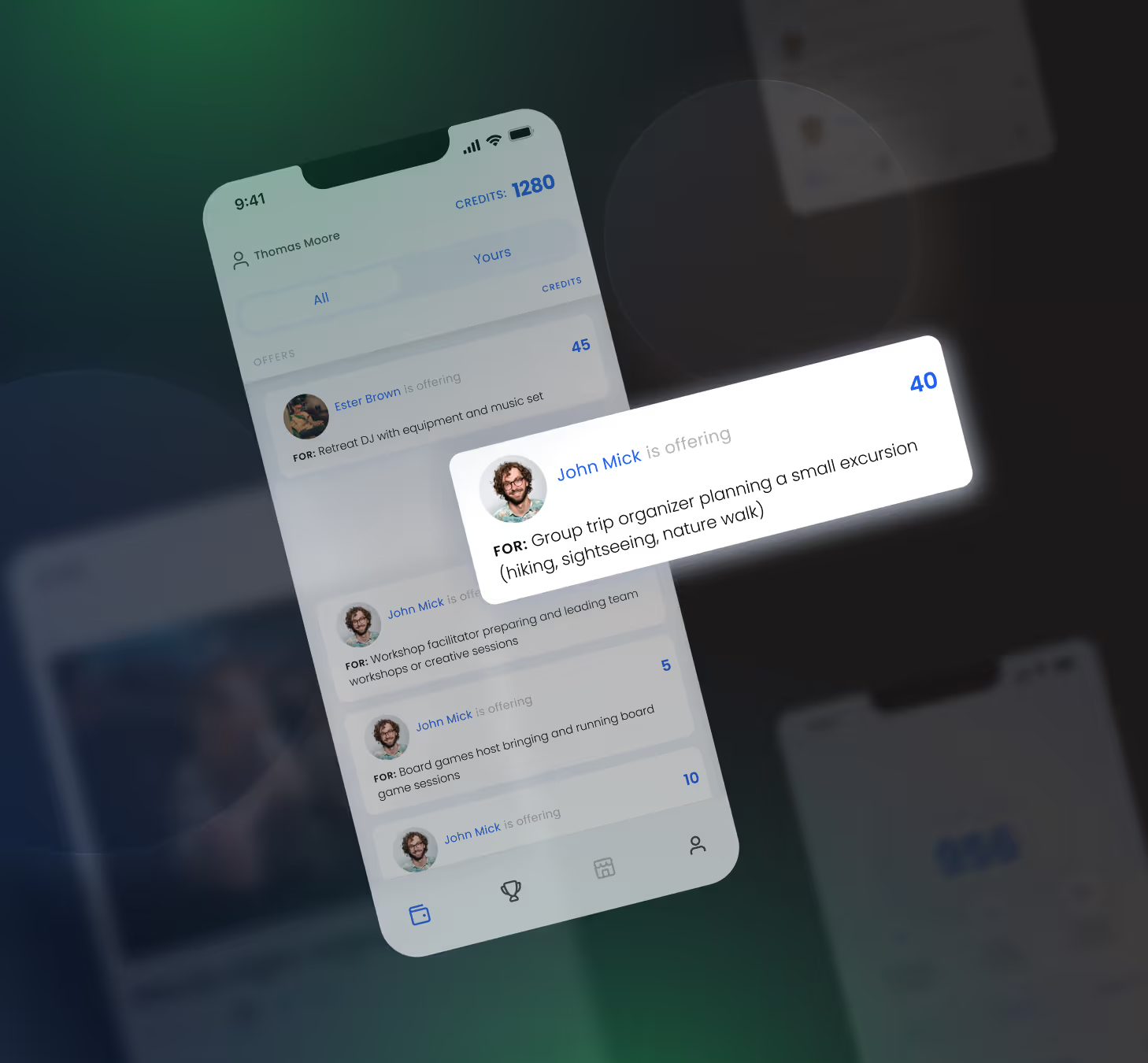
The delivery model matters as much as the category list. A credit balance employees can see and spend, in one place, across all five categories — that is what a modern SMB benefits package looks like.
Frequently asked questions
A competitive package includes: flexible health and wellbeing support, a learning and development budget without bureaucratic friction, peer and company recognition infrastructure, home office support for remote employees, and personal perks that acknowledge life outside of work. The delivery model — one platform with a visible credit balance — matters as much as the category list.
A typical SMB benefits package includes some combination of healthcare, flexible working, a learning budget, a wellbeing allowance, and recognition. In 2026, the standard is shifting toward credit-based flexible models where employees choose categories, rather than fixed packages where the company decides for everyone.
Small businesses win on flexibility and personalisation: employees who choose their own benefit allocation feel more valued than those who receive a generic package. Speed of access, visible balances, and genuine peer culture are advantages small companies can deliver better than large ones.
A credit-based benefit programme typically runs at £50–£120 per employee per month for core flexible benefits, not including healthcare or pension. This compares favourably with fixed benefit packages that often achieve 30–40% utilization — meaning a significant portion of the spend delivers no value to the employees it was budgeted for.
A benefits package that covers all five categories.
One platform, one invoice, real data on what your team actually values.
No subscription — buy credits and allocate them.