Employee Benefits for Startups: The 5 Things That Actually Matter to Your Team
What startup employees want vs. what founders think they want. Remote flexibility, learning, wellbeing, recognition, peer culture — and the simplest way to deliver all five.
Most startup founders approach employee benefits with one of two mindsets. The first: benefits are an afterthought until the company is bigger. The second: benefits must match what tech giants offer or talent will leave.
Both are wrong. Startup employees are not primarily motivated by comprehensive healthcare packages and free catered lunches. They joined a startup because they wanted autonomy, growth, proximity to impact, and a team where their contribution is visible. The benefit programme that works at a startup reflects those values.
What startup employees actually want
1. Flexibility that is real, not just policy
Flexible working is the most consistently cited benefit preference across startup employees — specifically the kind that is culturally real, not just written in a policy document. The test: can an employee manage a doctor’s appointment on a Tuesday without requesting leave? Can they work from a different city for a week without a process? Flexibility costs nothing to provide when the work permits it, and is rated above most financial perks by startup employees.
2. Learning budget with no friction
Startup employees tend to be growth-oriented — they joined a smaller company in part because they want to develop faster. The key word is friction-free. An annual L&D budget that requires manager sign-off and a three-week approval cycle is not a benefit — it is a process that employees stop engaging with after the first time they hit resistance. A credit allocation that employees can direct toward any course, book, or learning platform immediately, from their own balance, removes this entirely.
3. Wellbeing support that fits the individual
Startup work is often intense. The pace is higher and the boundary between work and rest is less clearly defined than in corporate environments. What “wellbeing” means varies: for some employees it is a gym membership, for others it is therapy, for others nutrition or sleep support. A company-wide meditation app subscription that 20% of the team uses is not wellbeing support. A credit allocation employees direct toward their own definition of wellbeing is.
4. Recognition that happens in real time, not quarterly
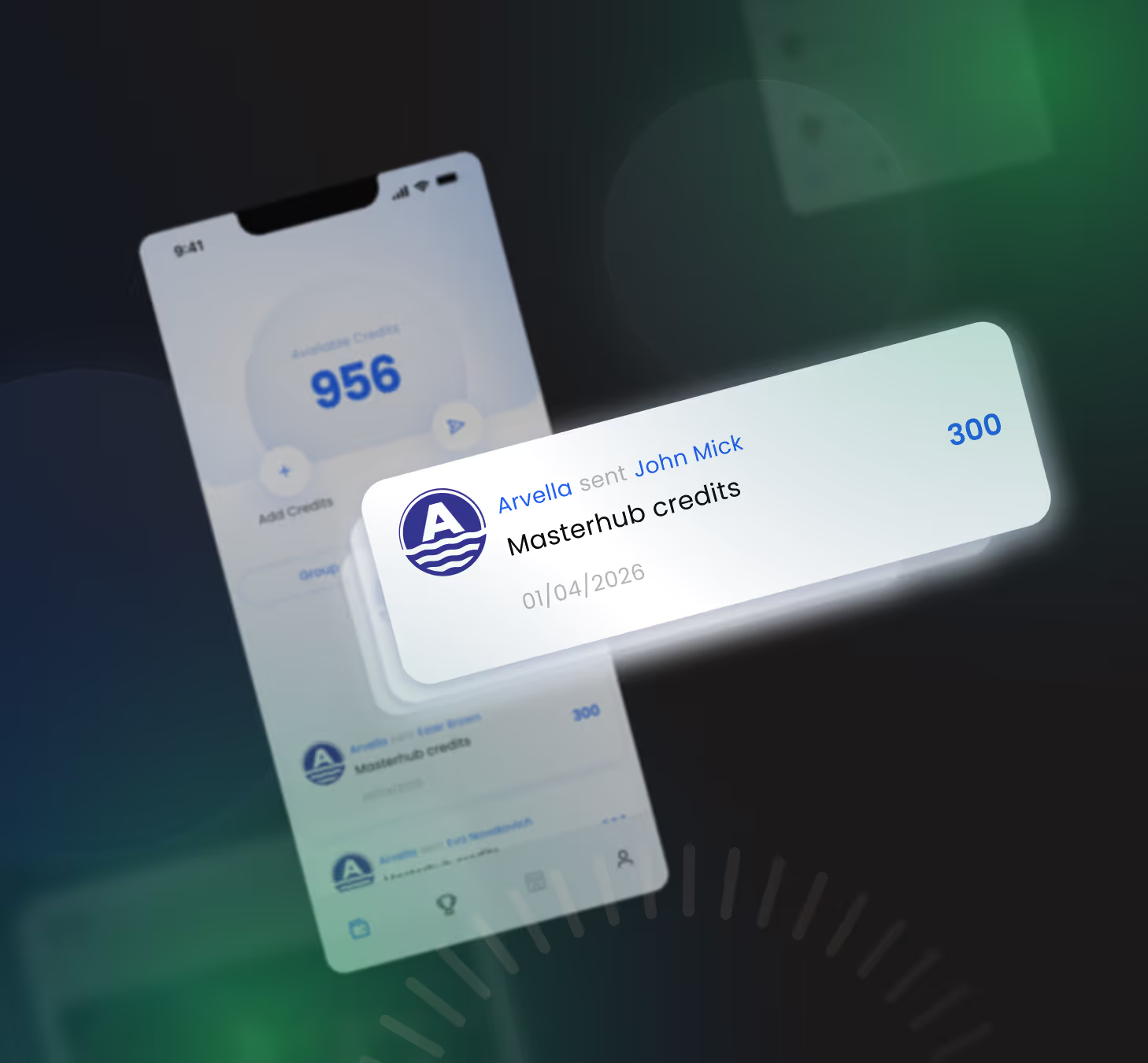
At a startup, the recognition culture is set early and sets hard. Teams that establish a norm of acknowledging each other’s contributions — peer to peer, in real time, specifically — carry that culture as they grow. Teams that do not have to rebuild it later, and rebuilding is harder. Peer recognition at a startup does not need a formal programme. It needs a mechanism: a way for employees to send a credit and a personal message to a colleague when something is worth acknowledging. The action takes 30 seconds. The culture effect compounds over months.
5. A sense that their contribution is visible
This is the benefit that is hardest to operationalise and most important to get right. Startup employees want to know that their work is seen — not in a performance review six months later, but in the week it happens. A benefit programme that delivers financial perks but misses this layer has solved the easier problem.
What startup benefit packages get wrong
Comprehensive healthcare, pension matching, and an expense policy are expensive to administer, difficult to negotiate at small scale, and rarely the thing that drives day-to-day engagement at a 15-person startup.
Free snacks, a ping-pong table, or an office dog are not employee benefits. They are amenities. When they substitute for flexibility, recognition, and genuine development opportunities, employees see through them immediately.
Announcing the benefit package during the annual review cycle, or mentioning it in an onboarding document and never again, means benefits are invisible for most of the year. A benefit programme that employees do not actively think about is not working.
Benefits that only work for office-based employees — lunch perks, city-specific gym deals, on-site sessions — are not benefits for remote team members. A credit-based system that works the same way for someone in Warsaw and someone in London removes this problem entirely.
What a startup benefit package can look like in practice
A credit-based benefit structure for a 15–50 person startup:
The short version
The benefit programme that works for a startup is not a smaller version of the enterprise stack. It is built around what startup employees actually value: flexibility, real learning budgets, wellbeing support they choose, peer recognition in real time, and a sense that their contribution is visible.
A credit-based benefits platform delivers all five without requiring HR infrastructure, multiple vendor contracts, or a monthly admin burden.
Frequently asked questions
The five benefits that matter most at startup scale are: genuine flexibility in how and where work gets done, a learning budget without a bureaucratic request process, wellbeing support employees direct toward their own needs, peer recognition that happens in real time, and mechanisms that make individual contributions visible. A credit-based flexible benefits system delivers all five without enterprise-scale HR infrastructure.
The most practical startup benefits structure is a monthly credit allocation per employee (₵50–₵80 is a common starting point), a marketplace of categories employees choose from, peer recognition built into the same system, an onboarding welcome credit on day one, and no subscription fee. The whole thing runs on one credit bundle and one invoice.
Flexibility consistently ranks highest — specifically cultural flexibility, not just a written policy. After that: learning opportunities with no friction, wellbeing support that is genuinely personal, recognition that happens in real time rather than at review cycles, and meaningful peer culture. Financial benefits matter, but they are rarely the primary driver of engagement or retention at startup scale.
A credit-based benefits platform with no subscription fee is accessible at startup scale. The cost is directly proportional to what is allocated — a 20-person team allocating ₵60 per employee per month is a predictable, manageable budget with full utilization data, one invoice, and no ongoing platform fee.
Build a benefit culture before you need an HR team to run it.
Credits, recognition, one invoice — from your first ten employees.
No subscription — buy credits and allocate them.