What Is a Corporate Benefits Platform — and How Is It Different From HR Software?
BambooHR and Workday track HR data. A benefits platform manages what employees can spend their budget on. They are different tools. Here is why both matter.
If your company uses BambooHR, Workday, or any HRIS, you already have HR software. Many founders and HR managers assume that this covers employee benefits too.
It does not — or at least, not in the way that matters to employees.
HR software and employee benefits platforms are different tools that solve different problems. Understanding that distinction saves companies from either overpaying for HR features they do not need, or underpaying for benefits infrastructure and wondering why employees are not engaged.
What HR software (HRIS) actually does
An HRIS is built to manage the operational and compliance side of employment. At its core, it does three things:
- Employee records — stores and manages personal information, employment history, job titles, salary, documents. The system of record for who works at the company.
- Payroll and compliance — manages payroll calculations, tax submissions, leave management, and compliance documentation.
- Performance and process — stores review records, manages onboarding workflows, tracks training completion, and handles hiring and offboarding admin.
What an HRIS does not do: give employees a benefit budget they can see and spend. It may record that a company offers certain benefits. It does not create the experience of actually using them.
What a corporate benefits platform does
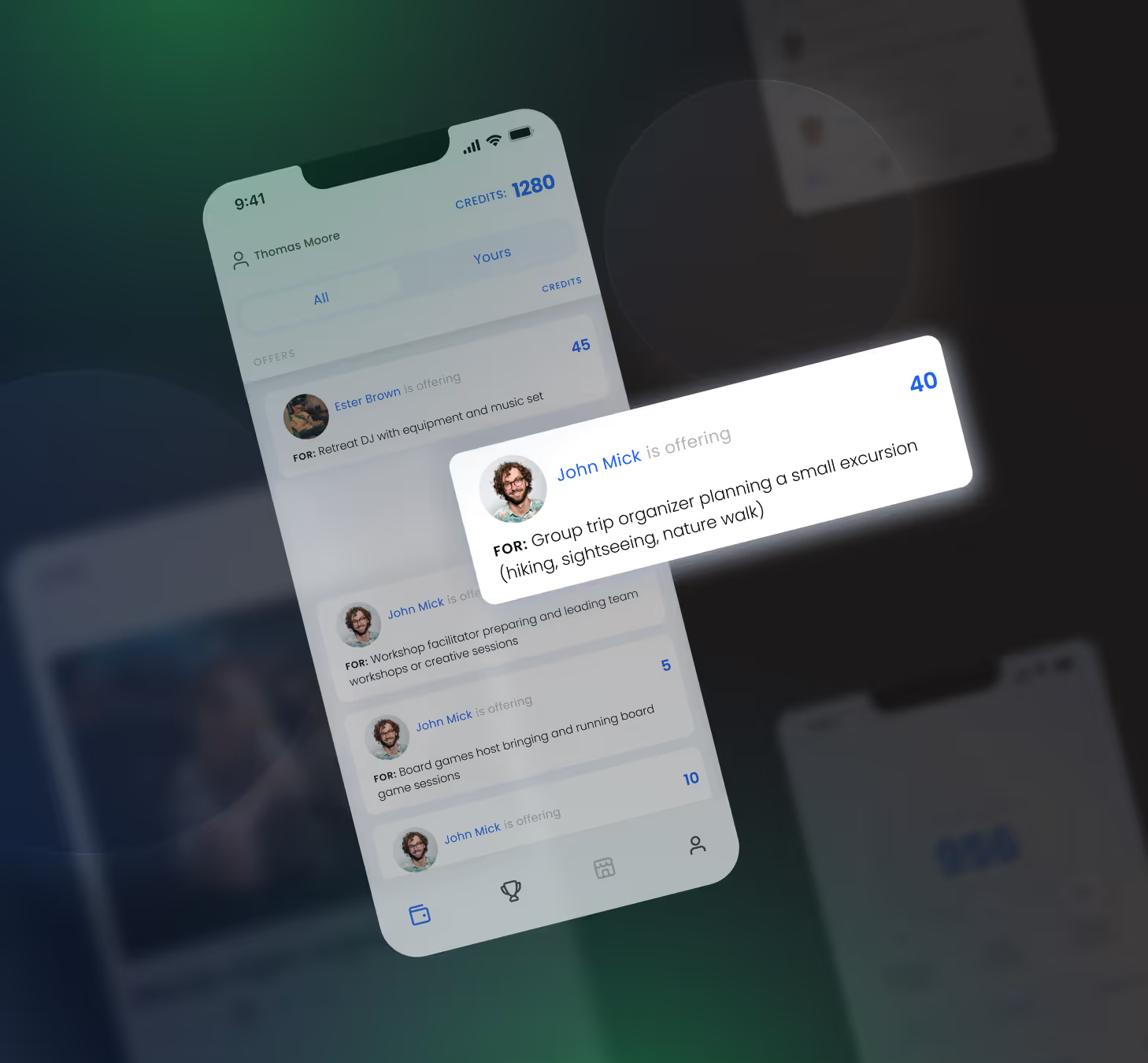
A corporate benefits platform is built around a different set of outcomes — the employee experience of benefits:
The practical test: can an employee open your HR software, see their current benefit credit balance, and spend it on a gym membership in under two minutes? If not, you have an HRIS but not a benefits platform.
Where the confusion comes from
The confusion often comes from two sources. First, some HRIS products include basic benefits administration modules — but these typically handle enrollment workflows and record-keeping, not employee spending experience or marketplace access. The fact that BambooHR has a benefits section does not mean it replaces a dedicated employee benefits platform.
Second, the word “benefits” appears in both contexts. HR software manages benefit entitlements and policies. A benefits platform manages benefit usage and engagement. These are related but not the same thing.
Do you need both?
For most companies above 30 employees: yes.
The HRIS handles the employment infrastructure — records, payroll, compliance, leave. The benefits platform handles the employee experience of benefits — what people can spend their budget on, how they see their balance, and whether they feel recognized by their peers and their company.
These are complementary tools, not competing ones. The decision of which to prioritise is usually sequenced like this: HRIS first (compliance and payroll are non-negotiable), benefits platform once the team reaches 20 to 30 people and the manual approach to benefit management starts creating overhead.
What Masterhub Wallet is — and what it is not
Masterhub Wallet is an employee benefits platform. It is not an HRIS and it does not try to be.
It handles the four things a dedicated benefits platform should handle: credit allocation, employee spending in a marketplace, peer recognition, and usage analytics. It does not manage payroll, leave, or employment records.
It works alongside any HRIS. It does not replace one. If you are evaluating tools for employee benefit management, recognition, and a way to make your benefit budget visible and actually usable — that is where Masterhub Wallet sits.
Frequently asked questions
HR software (HRIS) manages employment records, payroll, leave, and compliance. An employee benefits platform manages the benefit experience — distributing credits to employees, providing a marketplace to spend them in, enabling peer recognition, and tracking usage data. Most companies above 30 employees use both.
BambooHR includes a benefits administration module that handles enrollment and record-keeping. It does not provide employees with a visible spending balance, a self-serve marketplace, or peer recognition functionality. For companies that want a full benefit spending experience, a dedicated benefits platform is used alongside — not instead of — an HRIS like BambooHR.
A corporate benefits platform is software that manages how employees access and spend their company benefit budget. It typically includes credit or budget allocation tools for admins, a marketplace where employees spend their balance, peer recognition features, and usage analytics. It is distinct from HR software, which manages employment records and payroll.
Yes, if employee benefit engagement is a priority. HRIS tools manage benefit entitlements and records but do not create the employee experience of actively using and choosing benefits. A dedicated benefits platform gives employees a visible balance, a spending marketplace, and peer recognition — none of which are available in a standard HRIS.
See what a corporate benefits platform looks like alongside your existing HR setup.
Credit allocation, marketplace, peer recognition, usage data.
No subscription — buy credits and allocate them.