Why Your Company’s Best Knowledge Lives in People’s Heads — and How to Get It Out
Tacit knowledge disappears into Slack threads and meetings. Why companies lose it when people leave — and how internal creator channels make it visible and permanent.
Every company has people who know things nobody else does. The engineer who understands the original architecture decisions. The account manager who carries the context of hundreds of client conversations nobody else heard. The designer who has developed a visual instinct that guides every decision but has never been written down.
This knowledge is enormously valuable. It is also fragile. When the person is available, it flows freely. When they leave the company, it either disappears or requires an expensive knowledge transfer that should have happened months earlier.
Why institutional knowledge is so hard to capture
The tools companies typically reach for — wikis, knowledge bases, internal documentation systems — solve a different problem from the one they are trying to solve.
Written documentation works well for processes that are stable and well-defined. But the knowledge that matters most is contextual, judgment-based, and hard to separate from the person who holds it. “How do we handle this specific type of client escalation” is not a wiki article — it is a conversation, informed by dozens of past situations, that the relevant expert could explain in ten minutes but would take a week to write down accurately.
Documentation systems ask people to do the slow, effortful version of something they can do quickly in person. Most people choose quickly in person every time — which is why most internal wikis are out of date six months after they are created.
Where the knowledge actually goes — and what happens when it disappears
Institutional knowledge lives in three places:
The 15-minute Slack thread explaining a complex situation. The meeting where background context was provided. These conversations happen daily — and disappear just as quickly.
The expert who answers the same question ten times a week because they are the only one who knows the answer. Accessible — but only when they are available, and only to the person who knows to ask.
The presentation from three years ago that explains why the system is designed the way it is. Technically present. Practically inaccessible.
When an employee who carries significant institutional knowledge leaves, projects slow down. Decisions are made without context. New employees repeat mistakes that were already learned. The knowledge that was available yesterday is suddenly absent.
Why videos work better than documentation for tacit knowledge
The most effective way to capture tacit knowledge is the format that most closely resembles how it is shared naturally: a person talking, with context, in response to a real question or situation.
A short video — even an unpolished, phone-recorded explainer — captures the contextual judgment and verbal reasoning that a written document cannot. The expert does not have to translate their thinking into prose. They say it. The viewer hears the nuance, the emphasis, the caveats.
Requires translation into prose. Relies on obligation. Out of date quickly. Nobody contributes because it takes too long. Content is discoverable only if you know it exists.
Video-first format. Colleagues send credits when content is useful. Feedback loop sustains contribution. Content is searchable and remains available after the creator leaves.
The missing incentive — why experts do not share without a reason
Most knowledge-sharing initiatives fail because they rely on voluntary contribution with no reward. The company asks employees to document their knowledge as a professional obligation. The most knowledgeable people are also the busiest. They contribute at the start, when the initiative is new, and stop when other priorities compete.
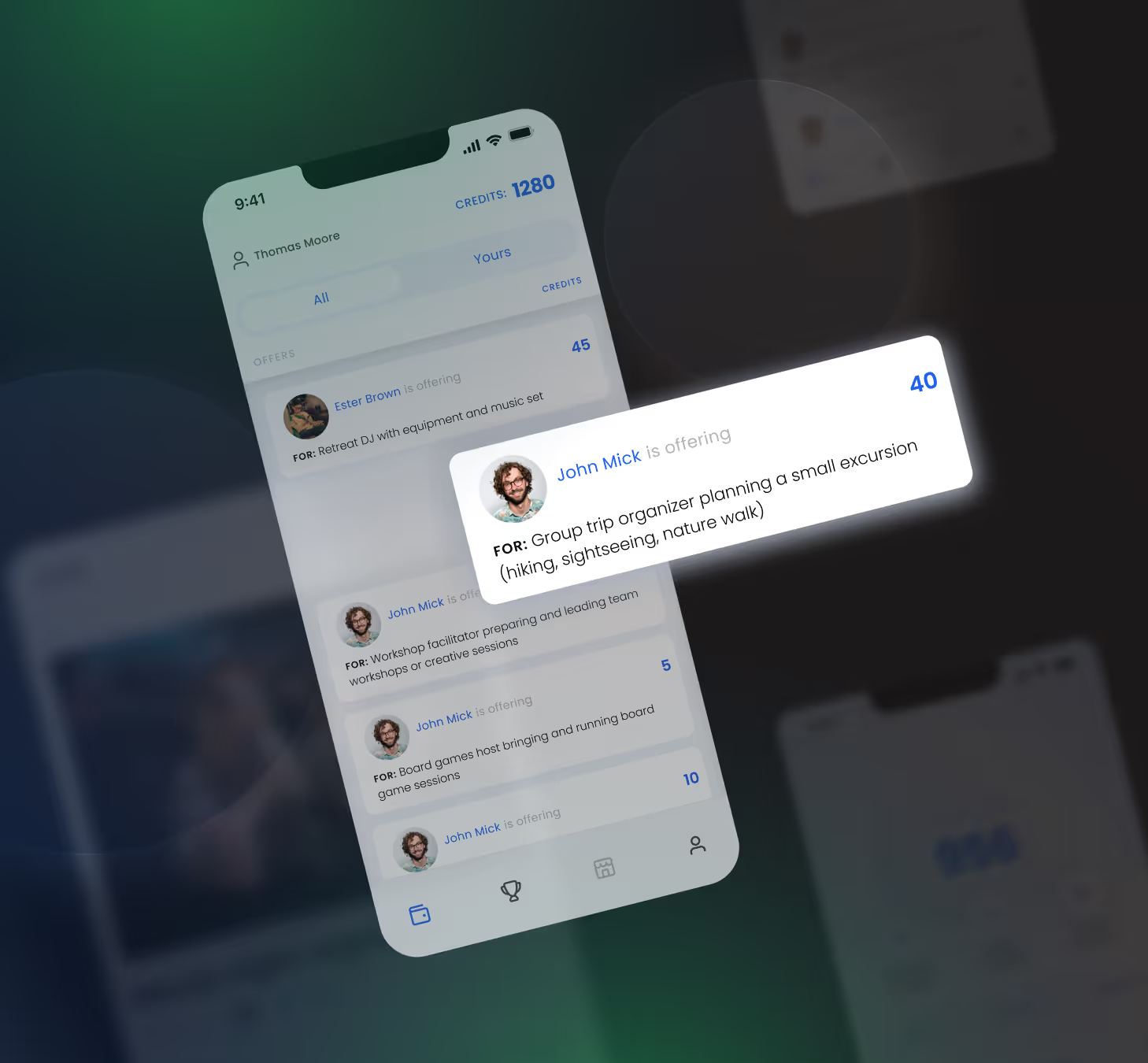
Credit-powered knowledge sharing changes the incentive structure. When an employee posts a useful video and colleagues support them with credits — a genuine, real currency they can spend — the act of sharing has a tangible reward. The expert sees which content their colleagues found most valuable. They are motivated to create more.
A ₵10 credit from a colleague who found the content useful is primarily a signal — “this was worth my time” — with a small tangible component. Together, they create a feedback loop that sustains contribution over time.
What stays when the person leaves
When an employee who has been contributing to an internal creator channel for a year leaves the company, they leave behind something that would not exist otherwise: a body of accessible, video-based knowledge that their colleagues can still use.
The channel remains. The videos remain. The new employee who joins six months after the creator left can watch the same explanation that would otherwise require a 30-minute one-on-one with a person who is no longer there.
Frequently asked questions
The main barriers are format mismatch (asking experts to write documentation when they can explain it faster verbally), no incentive structure (contributing knowledge is an additional task with no personal reward), and tool friction (knowledge management systems require effort and are rarely the place people go when they need to learn something). Solutions that address all three barriers — video-first format, credit-based incentives, and accessible channels — produce significantly better contribution rates.
The most effective approach is to build ongoing knowledge sharing into the daily culture before it becomes urgent — as a credit-powered creator channel where experts post videos and tips regularly and receive recognition when colleagues find the content useful. A channel running for six months before an employee leaves captures far more useful knowledge than a knowledge transfer meeting in their last two weeks.
Any employee can create an internal creator channel and post short videos, tips, or guides about their area of expertise. Colleagues can follow the channel, request topics they want covered, and send credits to the creator when they find the content useful. The credit-powered incentive makes contribution sustainable — experts share because there is genuine recognition and a tangible reward for doing so.
A wiki requires text-based documentation and relies on obligation for contribution. Credit-powered knowledge sharing uses video-first content (which suits tacit knowledge better) and provides a tangible incentive for contribution — colleagues send credits to creators whose content they found valuable. This creates a feedback loop that sustains contribution without HR needing to run a programme.
Give your experts a channel. Give your colleagues a reason to use it.
Internal creator channels built into the same platform as every other company benefit.
No subscription — buy credits and allocate them.